
Film Notes: Silence (2016)

Tova Gannana | Tuesday, April 21, 2026
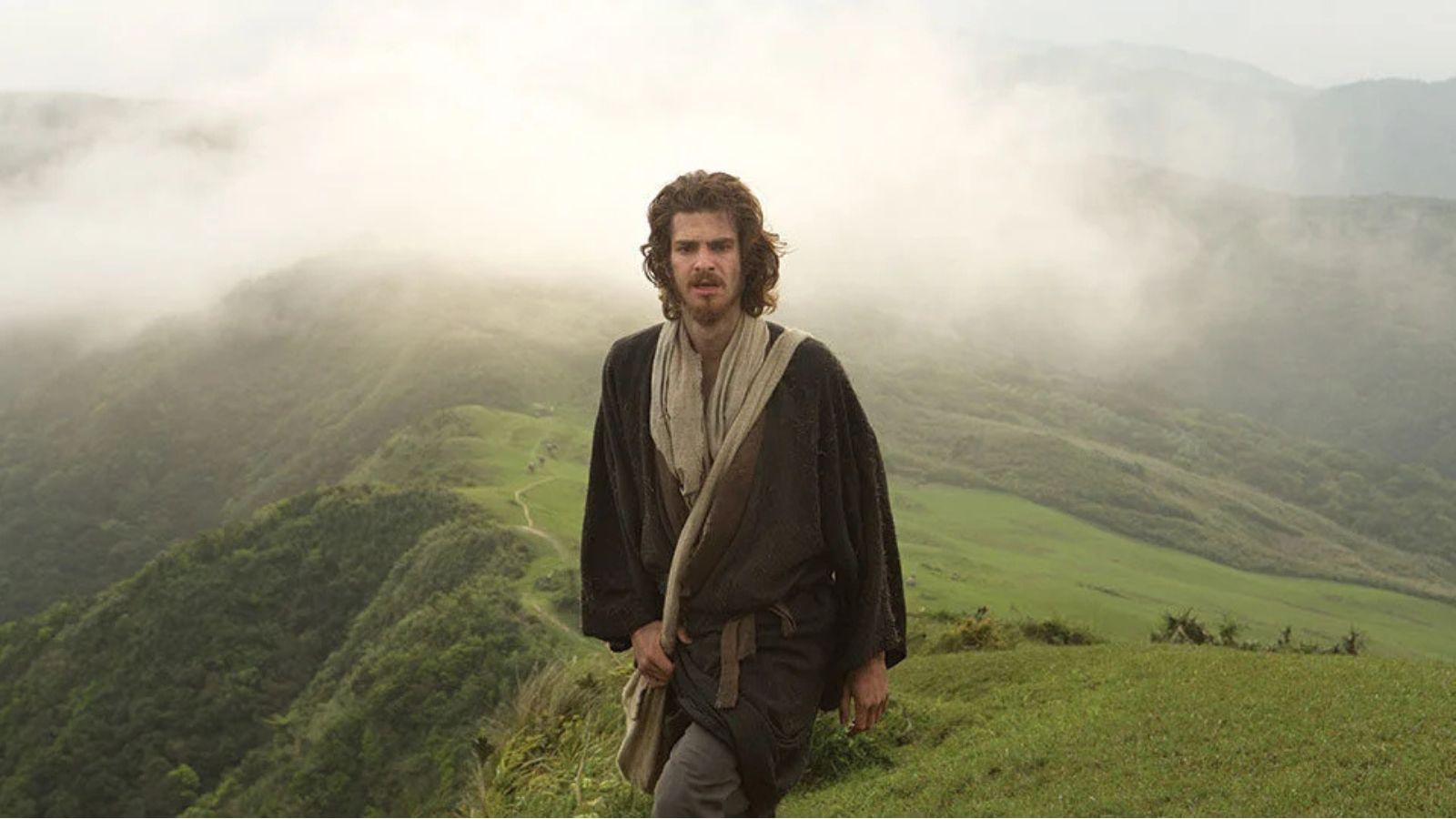

Silence (2016) film notes by Tova Gannana for the Martin Scorsese: Maestro of Cinema series, presented by SIFF, Festa Italiana and Greg Olson Productions. Series curated by Martin Scorsese and Greg Olson, written by Greg Olson. The series runs through April 2026 at SIFF Cinema Uptown. 

Religion is like wind: It traverses the planet in patterns, it dies down or rises up, it carries seeds across oceans to flower, it has been both “a great wind carries me across the sky” when searching for meaning, and “an ill wind that blows no good” when used for power. Seventy percent of the earth’s surface is covered by bodies of water. The human body is comprised of seventy percent water. Rainwater today is the same as it was for the dinosaurs. We can’t survive a world drought or world flood; there has a to be a balance. But who is responsible for this order? Who do we thank? And in tragedy, whom do we curse? 

One can be a baseball buff, wine enthusiast, chess master, cinefile, bookworm: all human-made pursuits, spiritual even. One can know many things, but no one is an expert on God. Religious ceremonies are a mix of pleading, and praying, praising. There are many names for God, infinite ways in which people express their belief in God, and there is no consensus on God as listener, doer, speaker. Christianity came to Japan in the 16th century, brought by Portuguese missionary Father Francis Xavier. Japanese worried that they would be conquered by Jesus, because by sword they could not be defeated. A colonial power in Asia, Japan was never colonized by Europe.

Silence (2016) begins and ends in darkness, with the sound of crickets, wind, something reeling and snapping. Beyond the dark sits the horizon; between night and day there is a first and last light. Silence closes with a director’s dedication, “For the Japanese Christians and their pastors, Ad Majorem Dei Gloriam”. The film takes place in the mid-1600’s but the dedication could be meant for the present, To The Greater Glory of God. One percent Japan’s population in Japan today is Christian, a testament to those who survived and passed down Christianity through generations, whether hidden when needed, or openly when allowed. 

In 1883 the Sun Dance, a sacred Lakota ceremony, was banned by the U.S. Government. Viewed as dangerous and unchristian, it would be nearly a century before that ban was lifted. For over a century, Christian boarding schools, funded by the U.S. Government abducted Native American children from their families, tribes, excising them from their traditions, culture, and beliefs. In the 15th century, Portuguese settlers arrived in Angola. From the 16thto the 19th century, Africans sold into slavery were baptized before the brutal and often fatal Middle Passage. In the 1800s in Rome, Jewish children were converted clandestinely by their Christian nannies, then taken to be raised by the Church, as their families were believed unfit to raise them. Today Angola is majority Christian. All of which is to say that to know where you’re going is to know where you’ve come from. The world has a record of who has been burned and who has done the burning. Talk about religion, and it’s not always about God.

In Silence, the Christian villagers have nothing but the earth under their feet, and each other, and they have their belief in Jesus, how he died for their sins. It’s a curious thing, conversion, especially when forced. To stay alive, to not meet death in a horrible way, the Christians in Silence must step on an image of Jesus. The one making them step is Inquisitor Inoue (Issey Ogata), aided by officials of the shogunate. And who is aiding the Christians but Padre Rodrigues (Andrew Garfield) and Padre Garupe (Adam Driver), who have come from Portugal to find Father Ferreira (Liam Neeson) – who is rumored to have apostasized a few years prior – and are moved deeply by the villagers’ religious fervor. For the villagers they perform confession, baptism, mass, all in secrecy.

Silence is narrated by Padre Rodrigues in the form of letters written back to his superior in Portugal. “We heard their confessions all night, even though we couldn’t always be sure what was being confessed. And now Christianity brought love. The dignity for the first time of being treated like God’s creatures, not animals. And the promise that all their suffering would not end in nothingness, but in salvation.” But Padre Rodrigues also questions. “These people are the most devoted of God’s creatures on earth. Father Valigano, I confess, I began to wonder: God sends us trials to test us, and everything He does is good. And I prayed to undergo trials like His son, but why must their trial be so terrible? And why, when I look in my own heart, do the answers I give them seem so weak?”

To be a Christian is to have faith that there’s an afterlife, that to die is to go to Paradise, that to apostate is to live a certain kind of hell because to get to heaven, one must believe in Jesus. The villagers in Silence don’t waver: Those who won’t step on the face of their Lord are killed slowly in terrible ways. Time, it seems, is the ultimate punishment: time to think. It’s as though Inquisitor Inoue is killing them with their time left, robbing them of their time here on earth. Father Rodrigues, tall and thin like a wind-whipped tree, his faith strengthened by his examinations with the Inquisitor, gives in and steps on the face of Jesus to save the lives of other Christians, whose lives have been promised to be saved if he apostates, not because he himself has bended. Where is God in all of this? That is ultimately Father Rodrigues’ question. Is God also present when God feels absent? Silence is shot in the dark colors of a winter thunderstorm, rain falls throughout the film, not lightly but as though the sky was also the sea.

  • Date: April 21, 2026
  • Share:
  • Tags: Cinema

Don't miss your future favorite film!

Subscribe to our newsletter and get the latest updates from the SIFF community delivered straight to your inbox.