


Don't miss your future favorite film!
Subscribe to our newsletter and get the latest updates from the SIFF community delivered straight to your inbox.
Don't miss your future favorite film!
Subscribe to our newsletter and get the latest updates from the SIFF community delivered straight to your inbox.
Adam Plesser | SIFF Cinema Worker | Monday, August 3, 2026
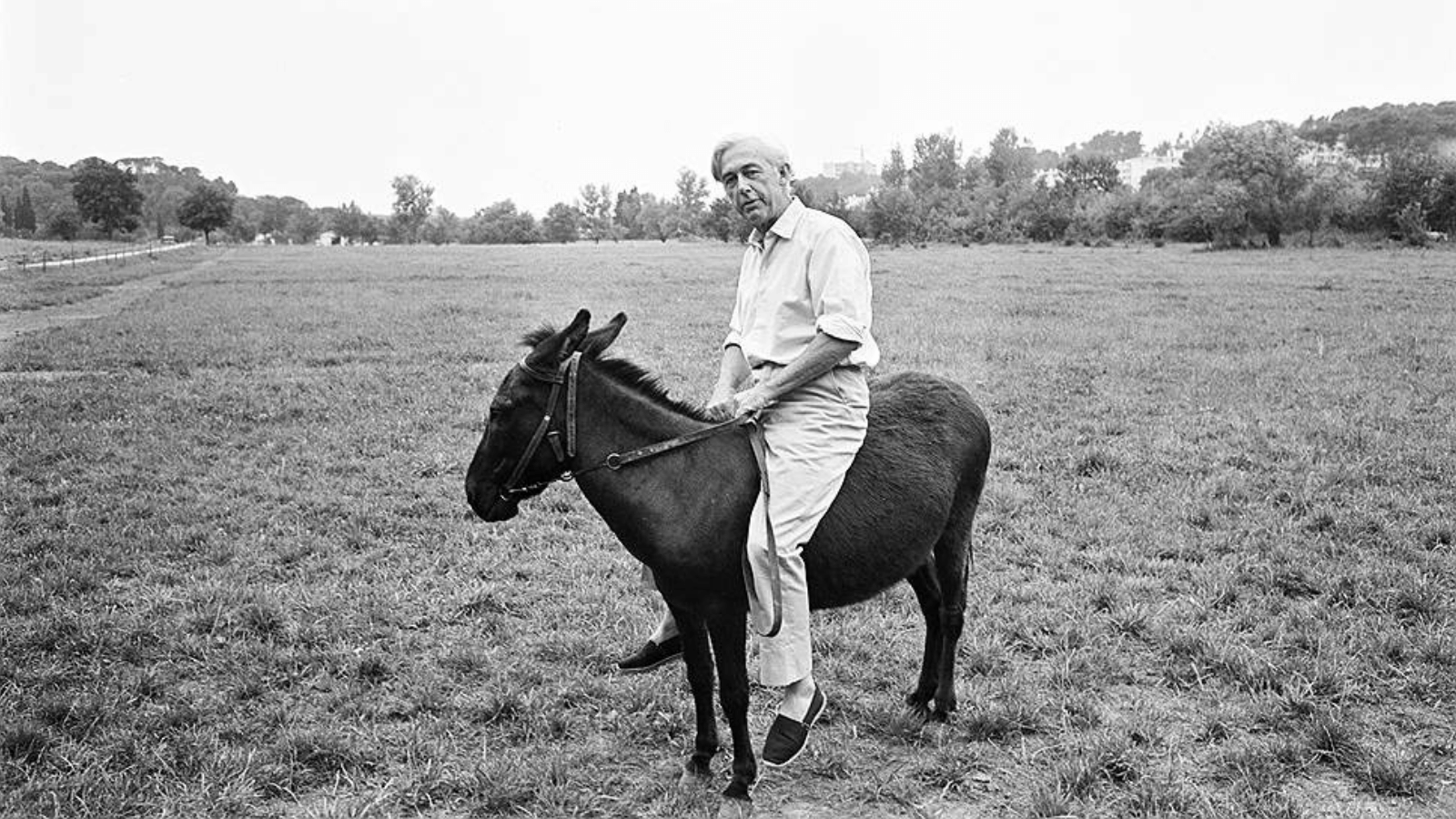
The trajectory of Robert Bresson’s career reveals an artist who, from the ‘50s through the ‘60s, perfected his genuinely novel cinematographic style—only to finish the last decades of his career with films that, while still excellent and unmistakably his own, noticeably shifted course. After the release of Mouchette in 1967, Bresson abandoned his rustic and carceral settings (excepting Lancelot of the Lake) and monochrome cinematography (Sontag, writing in the middle of his career, observed that “it is almost impossible to imagine a Bresson film in color” (Sontag, 192)); but perhaps most significantly, his last films express a despair which up to that point had always been mitigated by an underlying transcendent gesture toward salvation. Bresson’s drama is always internal and fundamentally concerned with grace and redemption: the priest’s struggles with his inability to save the fallen world in Diary of a Country Priest and his salvation via his discussion with the countess, Fontaine’s struggle to sustain an improbable belief in his liberation and his ultimate redemption through his faith in Jost in A Man Escaped, Michel’s nihilistic alienation and his roundabout journey to reaffirming the world in Pickpocket. In all of these films the outlook is pessimistic in a characteristically Catholic way (he sometimes described his filmmaking style as “Catholic Realism”), but never without an enduring sliver of hope. One has a much harder time finding any such redemption or grace in his latter films, particularly The Devil, Probably and L’Argent. In the context of this view of his artistic development, Bresson’s twin masterpieces of the ‘60s, Au Hasard Balthazar and Mouchette, represent illuminating transitional films in his oeuvre.
An interesting early indication of the onset of despair in Bresson’s filmmaking which is latent in these twin masterpieces, but fully reveals itself in his late films, is the appearance of murder and suicide. Jeanne’s martyrdom in The Trial of Joan of Arc marked the first appearance of on-screen murder in Bresson’s work and this attention to life-taking would continue through his transitional ‘60s films, particularly Mouchette and A Gentle Woman. A Gentle Woman is an especially revealing case because it is his first film in color, it’s set in Paris (not his first departure, but a departure nevertheless from his more typical countrysides, prisons, and prison-like homes), and because suicide is neither a contingent incident in the film nor merely a conclusion, but rather the film’s point of departure and central question; it is the first film in which Bresson’s latent developments fully manifest themselves.
So where does this map of Bresson’s development place Au Hasard Balthazar? I have described it as a transitional work, but is Balthazar fundamentally pessimistic or is there any redemption to be found in its world? Balthazar is monochromatic, pastoral, and exhibits all of Bresson’s characteristically minimalist tendencies, suggesting that it’s a typical work of his mid-career period. But the cruelty, suffering, and folly of its characters may suggest that its maker had already abandoned hope for mankind’s salvation by that point; which, if admitted, would align it with the despair of the later Bresson. Balthazar has a hard life, no one in the film is obviously happy, and there are only a few characters one might describe as “good” or “kind” people; a description, moreover, that would come for each of them with its own list of qualifications and short-comings. Additionally, Balthazar features some of the earliest suggestions of violence and murder in Bresson’s work since Angels of Sin. The police allege a man has been murdered and one of Balthazar’s owners attempts to shoot a policeman. Murder and suicide are, of course, mortal sins in Bresson’s Catholic worldview, so do their appearance in Balthazar suggest that this film has abandoned all hope of redemption?
Bresson’s elliptical, opaque filmmaking makes it unadvisable to attempt to address his questions with final answers; however, I wish to show that Balthazar at least may be read as holding on to an unbroken core of hope for man’s salvation. Moreover, the fact that Balthazar maintains hope for man’s salvation, but that it keeps this hope much more implicit than Bresson’s previous films, marks it as a uniquely transitional film in his filmography. It is true that the notion of murder makes a conspicuous appearance in Balthazar, but it’s worth noting that it is unlike the explicit murders of L’Argent or Lancelot of the Lake, films more clearly in Bresson’s despairing period. The latter film features a decapitation in the first minute of its runtime, a significant escalation of what is only obliquely suggested in Balthazar. In Balthazar the police allege that a man has been murdered, but the death occurs off-screen and it is never made clear whether the death was, in fact, the result of a murder or not. This does represent an escalation of violence from films like Diary of a Country Priest and Pickpocket, but it is still mediated by uncertainty and occurs at the absolute margins of our knowledge of the world with which we are presented. Similarly, the violence of the attempt on the police officer’s life is mitigated by the attempt’s failure. Balthazar’s relationship with violence helps begin to illustrate its uniquely transitional nature in Bresson’s oeuvre: violence appears, but its appearance is mediated or mitigated. The case is similar with the film’s despair: we can sense the scales tipping more heavily toward despair than they have in his past films—the film conspicuously lacks what Schrader called the “decisive action,” generally the film’s emotional and narrative climax and an opportunity for his gesture towards salvation (Schrader, 97-107)—but we’re not yet in the hopeless world of The Devil, Probably.
If the appearance of violence has not ridden Balathazar’s world of the potential for salvation, the next and more difficult question is how to find this salvation in the face of the film’s sheer misery and wickedness. It has frequently been noted that Balthazar, over the course of the film, has a total of seven different owners. While this has been variously interpreted as representing the seven words from the cross or the sacraments of the church (Quandt), it is easiest to read these owners as representing the seven deadly sins. This is also the interpretation that is best-supported by Bresson’s responses in interviews. If, then, the majority of the film’s characters are personifications of sin, the outlook is profoundly bleak and it’s harder to see where salvation could be read in the film. The answer, of course, is that the film’s hope for redemption is to be found in Balthazar himself on the one hand, as well as in his significantly-named caretaker, Marie.
Many have found a Christ figure in Balthazar, and this interpretation is well-supported by the film. Marie makes him a crown of plant material and flowers; clearly a crown of thorns for the Christ-donkey. Marie’s mother calls Balthazar a saint. Toward the end of the film Balthazar is saddled with money and perfume, connecting him to the Biblical Magi and therefore to Jesus. The fact that Marie is Balthazar’s most loving, maternal caretaker is itself a significant suggestion that Balthazar ought to be read as a Christ figure. If we accept this reading, then it’s fairly straightforward how Balthazar may be a wellspring of hope for man’s salvation in this film. Of course Balthazar lives a difficult life and of course he’s born into a fallen world, but he is sacrificed for our sins. Though the passion of Christ isn’t an uplifting tale, and though mankind’s redemption must be mediated by Christ, mankind is nevertheless saved despite our sins.
But mankind’s redemption via the intermediary of Christ is easier to understand than its salvation via Balthazar. Balthazar does not endure the world’s cruelties out of Christlike love. For Balthazar to function as his world’s savior another mediator is needed, a human mediator: Marie. Marie is a complicated, difficult character. We might read Balthazar’s owners as embodiments of each of the seven sins, but Marie is not captured by this description; it is her father—the personification of pride—who we count as Balthazar’s owner in this reading. Marie is not cruel like the world around her, she’s one of the only characters in the film who clearly expresses love and compassion, but she certainly also expresses faults like naivety and self-destructive tendencies—notably very human, unmalicious faults. Bresson’s characters are uniquely resistant to psychoanalysis, as Sontag rightly notes when she writes “Bresson is interested in the forms of spiritual action—in the physics, as it were, rather than in the psychology of souls. Why persons behave as they do is, ultimately, not to be understood” (Sontag, 188). Marie’s love for Gérard is baffling and difficult to stomach, but it is nevertheless an expression of love in a world that sorely lacks such sentiments. Moreover, her unique recognition of the purity and dignity of Balthazar, a recognition shared only by the other children in the opening and by her mother, connects her directly to the notion of salvation. If Balthazar is a manifestation of Christlike purity, Marie is likewise a manifestation of a deeply human, deeply fallible effort to love in a cruel world. Her efforts, like Balthazar’s, are punished rather than rewarded, but that should not prevent us from reading her as a hopeful figure. We might identify Marie as the middle term between the fallen, sinful world and Balthazar; she’s human but she’s still in contact with something edenic, something prelapsarian. It is this connection between Marie and the edenic, expressed by her love for Balthazar, that makes the strongest case for humanity’s potential salvation in this fallen world.
Balthazar’s world may be cold and cruel, but it is not nihilistic or loveless. Man’s redemption is not emphasized as clearly as it is in earlier films like Pickpocket, one must squint to see it, but it is there for the viewer willing to find it. When asked if he viewed The Devil, Probably as a despairing film, Bresson responded “I wouldn’t call any of my films despairing” (Bresson, 268). I’ve challenged this claim, but this reveals that at least Bresson himself did not view Balthazar as a despairing film. The film’s less-explicit redemption, its mediated and mitigated violence, and its generally fallen world reveal it as a unique transitional film in the arc of Bresson’s work.
Bresson, Robert. Bresson on Bresson: Interviews, 1943-1983. Edited by Mylène Bresson, translated by Anna Moschovakis, New York Review Books, 2023.
Quandt, James. “Au hasard Balthazar.” Criterion Current, 13 June 2005, https://www.criterion.com/current/posts/370-au-hasard-balthazar. Accessed 30 July 2026.
Schrader, Paul. Transcendental Style in Film: Ozu, Bresson, Dreyer. University of California Press, 2018.
Sontag, Susan. Against Interpretation and Other Essays. New York, Picador, 1966.
Don't miss your future favorite film!
Subscribe to our newsletter and get the latest updates from the SIFF community delivered straight to your inbox.
Don't miss your future favorite film!
Subscribe to our newsletter and get the latest updates from the SIFF community delivered straight to your inbox.