


Don't miss your future favorite film!
Subscribe to our newsletter and get the latest updates from the SIFF community delivered straight to your inbox.
Don't miss your future favorite film!
Subscribe to our newsletter and get the latest updates from the SIFF community delivered straight to your inbox.
Robert Horton | Wednesday, November 4, 2026
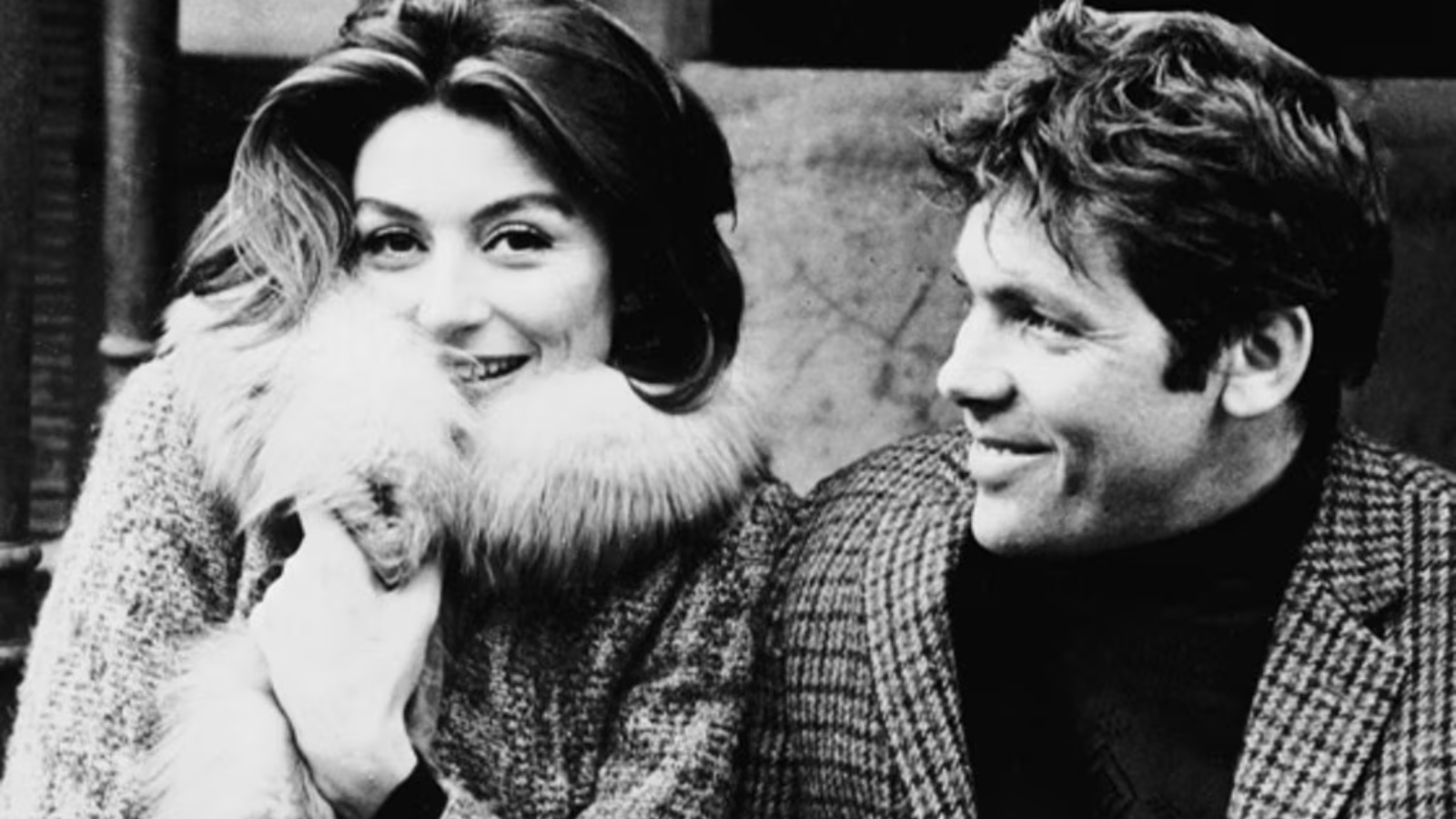
At one point in A Man and a Woman the title characters remark on a quote by Alberto Giacometti. The artist said that if he had to run into a burning building and choose between saving a Rembrandt or saving a cat, he would cart out the cat. “Between art and life, I choose life,” he allegedly said. The characters mull this over and agree with the sentiment; you sense that the movie endorses it, too.
The choice is rather unfair, because of course most of us cat people would choose the cat. But the overall art vs. life sentiment calls to mind an ongoing argument in the mind of François Truffaut, who tended to write things like “Are movies more important than life?” Truffaut’s dedication to art is an important theme in his work (his film of Fahrenheit 451, adapted from Ray Bradbury’s novel about a society that bans books, is less interested in issues of free speech than it is in the physical and spiritual beauty of books themselves). And it is impossible to imagine a character in a Jean-Luc Godard film saying anything like “I choose life,” given Godard’s distanced and complicated view of the human condition.
But here is Claude Lelouch, younger director of the French New Wave, avowedly choosing life. (He also opted out of much enthusiasm for the New Wave itself, declaring that he learned how not to make movies from it.) His film A Man and a Woman, wherever it falls on the art-life spectrum, was one of, if not the most, financially successful film from the New Wave, a big arthouse hit in America and winner of two Oscars (Best Foreign Language Film and Best Original Screenplay). You might think that the music won an Oscar, too, given its success, but more about that later.
The woman is Anne (Anouk Aimée), a script supervisor for the movies; the man is Jean-Louis (Jean-Louis Trintignant), a race-car driver. They meet in Deauville because they each have a child attending school there. One Sunday when she misses the return train to Paris, he drives her back, and something begins. What follows is, in terms of story, very simple, if laced with melodramatic incidents, especially in the flashbacks. But carrying this simplicity is Lelouch’s approach, which, however you feel about it, can at least be said to carry some of the spirit of the French New Wave: He tries out new things, in abundance.
Most obviously, the film unfolds in both color and black-and-white; Lelouch said it was a budgetary concern and black-and-white was cheaper, although in 1966 it must have seemed rather mod, too. Some scenes clearly incorporate improvisation, especially with the two children. Others pass by without dialogue, in the style of TV fashion commercials. And time operates in a quirky way, with Lelouch lingering over the racing-car sequences in a purely personal way that goes far beyond the necessities of plot. Jean-Louis Trintignant’s uncle was a Formula One driver and won the 24 Hours of Le Mans race once, and Lelouch was a big car nut; his nine-minute 1976 film, Rendezvous, consists of a single shot from the front seat of a car speeding through the streets of Paris at dawn. Lelouch drove the car himself. (I wonder whether A Man and a Woman became a prime late-1960s date movie because men could justify a love story in which you got to spend a lot of time watching race cars go around a track.)
Even if the appeal of A Man and a Woman was the love story, audiences of the late 1960s could surely sense the presence of a cool style, something that looked and felt different from the customary Hollywood approach. It was influential, too—look at subsequent Hollywood productions such as The Thomas Crowne Affair, with their chic surfaces and fresh, slightly jumpy way of getting from scene to scene.
Francis Lai’s score was influential, too, and two years later he won an Oscar for Love Story, which seems melodically in the spirit of his A Man and a Woman music. Lai’s music to A Man and a Woman blended with pop songs on the soundtrack, which act as both storytelling devices and ambient texture, a practice that would increase exponentially as movies became more jukebox-like in the coming years. Lai’s action-movie theme, with its booming bass drums, sounds as though it had been written as the intro for a weekly TV sports digest (in fact it was appropriated by the BBC series “Panorama” as its theme music for years); the main love theme, with its Euro-Burt Bacharach babbling voices, is a definitive “Resistance is useless” kind of earworm.
In its stars, A Man and a Woman is a billboard of ’60s French iconography: Trintignant had debuted opposite Brigitte Bardot in Roger Vadim’s sexed-up box-office smash …And God Created Woman (the success of which surely paved the way for the New Wave to explode), and would go on to star in My Night at Maud’s and The Conformist a few years later. Anouk Aimée had had a long career already—radiant in Jacques Demy’s Lola, iconic in two Fellini films, La dolce vita and 8 ½. She is certainly enigmatic in A Man and a Woman, which fits Lelouch’s scheme. We hear Jean-Louis’ interior monologue—but not hers.
And the title? There is a radio report the couple hears as they are driving south, about “a man and a woman” who die in a car crash. A curious detail! If this were the twilight zone, they would be dead, and the whole movie a dream. Which it sometimes feels like. But a glossy, stylish, impeccably dressed dream.
Don't miss your future favorite film!
Subscribe to our newsletter and get the latest updates from the SIFF community delivered straight to your inbox.
Don't miss your future favorite film!
Subscribe to our newsletter and get the latest updates from the SIFF community delivered straight to your inbox.