


Don't miss your future favorite film!
Subscribe to our newsletter and get the latest updates from the SIFF community delivered straight to your inbox.
Don't miss your future favorite film!
Subscribe to our newsletter and get the latest updates from the SIFF community delivered straight to your inbox.
Robert Horton | Wednesday, October 14, 2026
Agnès Varda’s first feature was La Pointe Courte, in 1955, a date that puts her a few years ahead of the far higher-profile French New Wave debuts of François Truffaut and Jean-Luc Godard. Neglected at the time, and forgotten by film history for a while, La Pointe Courte (edited, incidentally, by another New Wave master who had yet to make his feature debut, Alain Resnais) has been re-appreciated in recent years, which is deserved. And yet, it’s not hard to understand why it didn’t catch the public imagination in the way that Truffaut’s empathetic view of childhood or Godard’s sexy modern lovers did. A curious, evocative mix of documentary and somewhat arty relationship drama, set in a French seaside town, the film is a little too clear-eyed and critical to be beloved, and it certainly doesn’t try to be hip. Varda’s second feature, Cleo from 5 to 7, brings in Paris glamor, and then immediately opens a critique of that very thing, presenting a protagonist who is not intended to be cuddly.
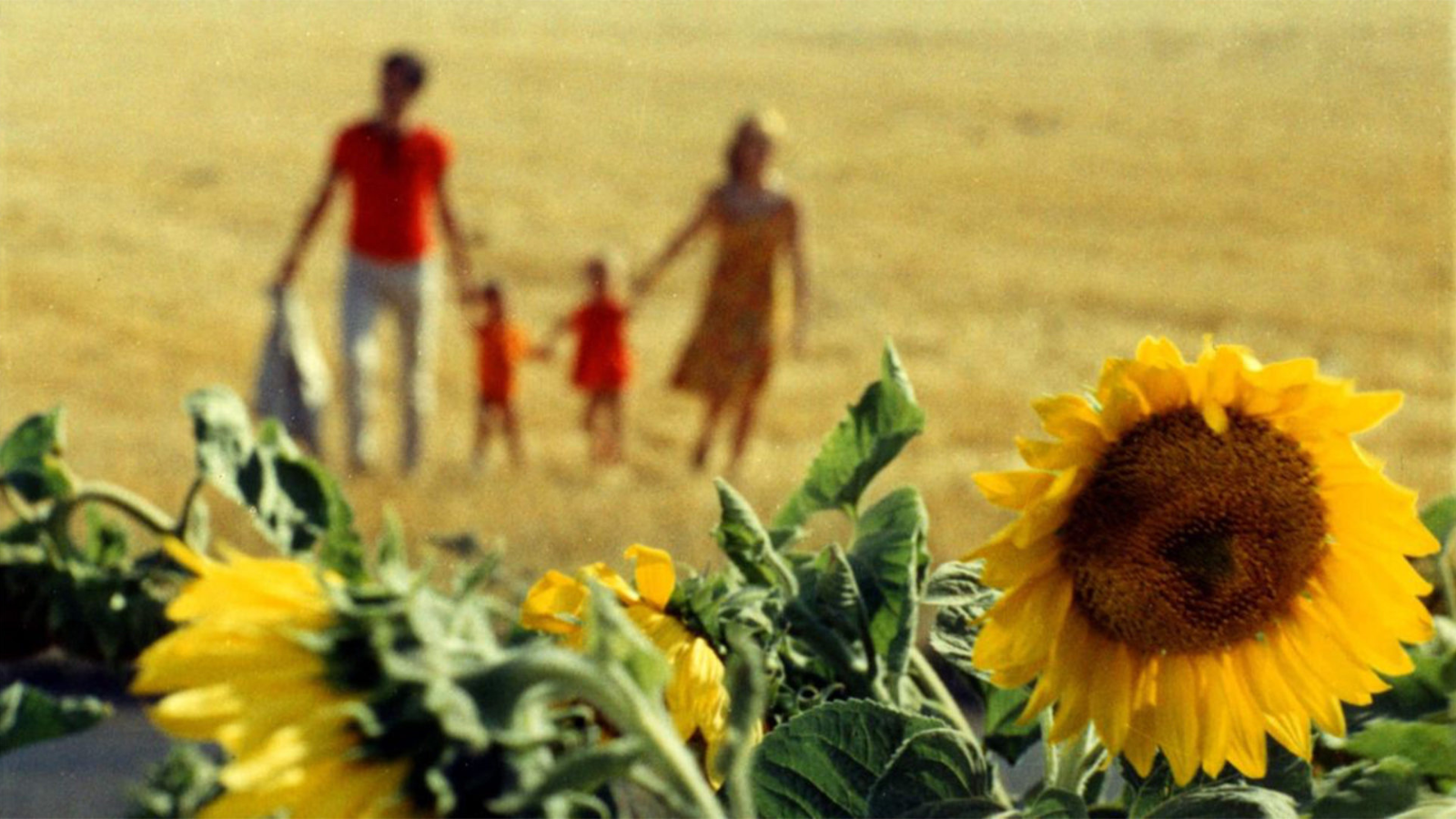
Varda’s third feature, La Bonheur (and titling a movie “Happiness” comes to seem more and more devastating as the movie goes on), opens by blooming into rapturous, brightly-colored life, presenting that most French of pastimes, the picnic on the grass. Close-ups of a sunflower alternate with shots of a family of four, out of focus in the distance. Even before we meet the family, Varda establishes a way of looking that involves a scheme of saturated colors and the presence of nature (trees, flowers, and shrubbery intrude on scenes throughout the film). Mozart floods the soundtrack, almost insisting on the joy of the moment—like the soundtrack to a corny movie would.
As the next few scenes of domestic contentment unfold, we might be fooled into thinking Varda will sketch a portrait of bliss, finally creating a film that could be easier to love than her previous work. But everything—the colors, the music—is a little too much, as though signaling us to be wary. Husband and father François (Jean-Claude Drouot), a carpenter, is utterly in love with his wife Thérèse (Claire Drouot) and their two young children. (In one of Varda’s inspirations, the family is played by Drouot’s real-life wife and children, who were not actors. The Drouots are still married, in case you wondered whether life imitated art in this case.) One day he meets a postal worker, Émilie (Marie-France Boyer), and an affair begins.
Melodrama would seem to be next. But this is not quite what happens: Varda’s treatment of this situation is like a rebuke to conventional movie expectations. At first we might think her innovation is presenting a worldly, European approach to marital morality; after all, why is it impossible that a man might love two women equally, with happiness “growing larger” all the way around? But Varda’s ambiguous treatment of the final sequences undercuts that sort of pat message. The way she lets the viewer decide how to feel about all of this adds to the creeping sense that there is always a price to be paid somewhere.
It leads to a fade-out that looks like a happily-ever-after romance, but feels like the end of a murder story. The French New Wave’s master of sinister crime pictures, Claude Chabrol, could not have fashioned a more skin-crawlingly strange ending. (Even Mozart sounds disturbing now.) And speaking of Varda’s Nouvelle Vague brethren, does Le Bonheur resemble a reverse-mirror version of the Jules and Jim triangle, drained of the bohemian philosophizing and doubtful of that film’s romanticism?
Varda’s style is fascinating to watch. The film’s bold colors—vividly painted walls, color-coordinated clothes, all those flowers—feel like more than just emotional signals; they also lend a curiously artificial touch to the action. Certain scenes can unfold in fractured ways that today look very Sixties, for want of a better term; as François and Émilie sit at a sidewalk café, Varda includes unusual inserts and moments when strangers in the background come into focus. In a movie flirtation scene, we are used to being drawn into the private world of the lovers, yet Varda yanks us out of that intimacy—perhaps the movie lover within us wants to get lost in this affair, but Varda is too skeptical for that, skeptical about movies, and perhaps also skeptical about love embedded in a man’s world. She punctuates the scene with close-ups of signs that read “Mystery” and “Temptation,” as though advertisements cheapen the feelings on display.
With these stylistic experiments, and the ambiguity of the story, Le Bonheur remains quite enigmatic, even eerie. We may see François as maddeningly self-centered in his ideas of happiness, yet he is undeniably sincere, and Varda allows him his joyful run through the streets on his way to his lover. We may note the way Thérèse and Émilie resemble each other, and wonder whether women are interchangeable to men, slim figures in rhyming sundresses. Elsewhere, women are measured for wedding gowns (Varda pointedly makes time for the ritual of marriage to be included, in what appears to be a very tradition-oriented community), or held up for comparison as icons—the scene of Thérèse asking her husband whether he prefers Brigitte Bardot or Jeanne Moreau (two of the greatest Nouvelles Femmes) is immediately followed by a shot of his workplace, where magazine photos of the actresses are taped to the wall.
We may notice all these ideas and images of women, but the filmmaker will not tell us what to think. Le Bonheur is a feminist film, but no one has ever walked out of it thinking, “Well, that was empowering,” given its subject matter. And yet there is something empowering here: the vision of a filmmaker presenting an original and challenging vision exactly as she wants.
Robert Horton will lead a free online conversation about Le Bonheur on Saturday, October 24, at 2pm, as part of Scarecrow Academy’s “Sixties on Film” season.
Don't miss your future favorite film!
Subscribe to our newsletter and get the latest updates from the SIFF community delivered straight to your inbox.
Don't miss your future favorite film!
Subscribe to our newsletter and get the latest updates from the SIFF community delivered straight to your inbox.